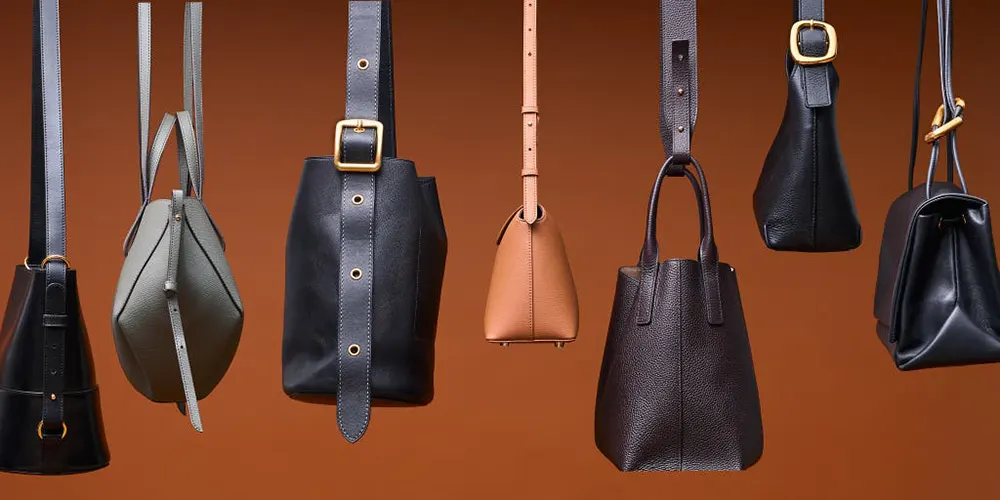
Togo and Epsom leather are two of the most common materials found in high-end leather products. Both are durable and have an elegant look, but their textures, flexibility, and functions vary significantly. The decision to use one or the other should be based mainly on the individual’s way of life and the preferred look rather than the quality.
1. Origin and Manufacturing Characteristics
Togo Leather: Natural Grain with Soft Structure
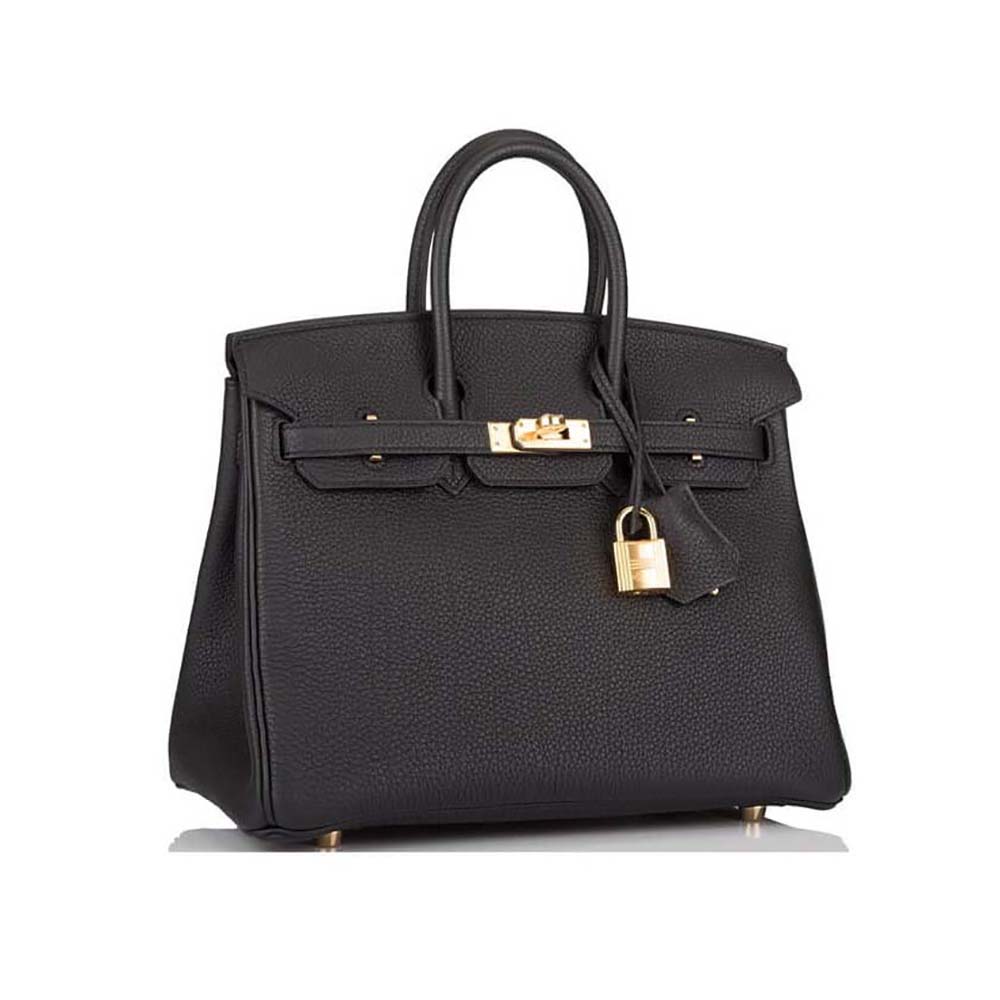
Togo leather originates from either a baby calf or a calf, which makes it a very light and at the same time durable material. After Hermès first launched it in 1997, it didn’t take long for it to become Hermès’ most popular option for luxurious everyday bags because of its perfect combination of softness and firmness of the form.
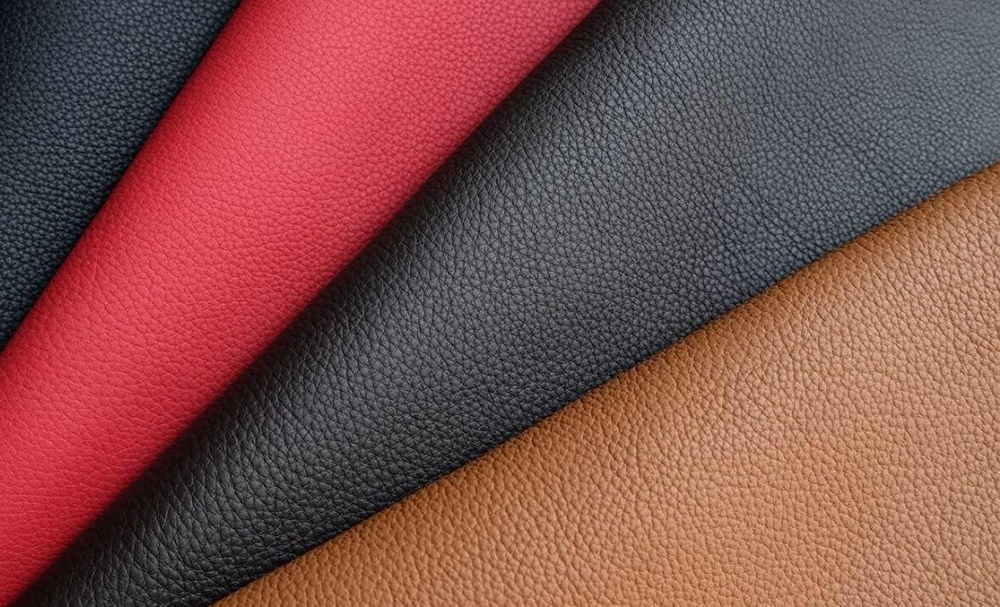
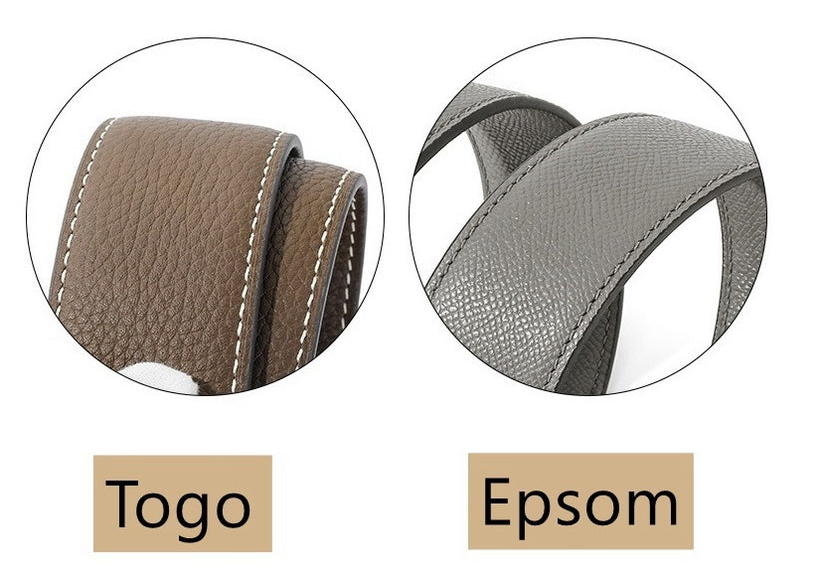
The leather is naturally pebbled with vertical veins of the leather visible. The thickness and pattern of the veins differ from one skin to another, thereby each piece being different from other pieces in terms of character. Togo leather is light in weight but it can still keep its form and it has a matte finish which helps in the reduction of the visibility of the scratches. If the bag gets scratched, it is in fact very easy to do leather refurbishment to make it look like new again.
Epsom Leather: Embossed Texture with Defined Shape
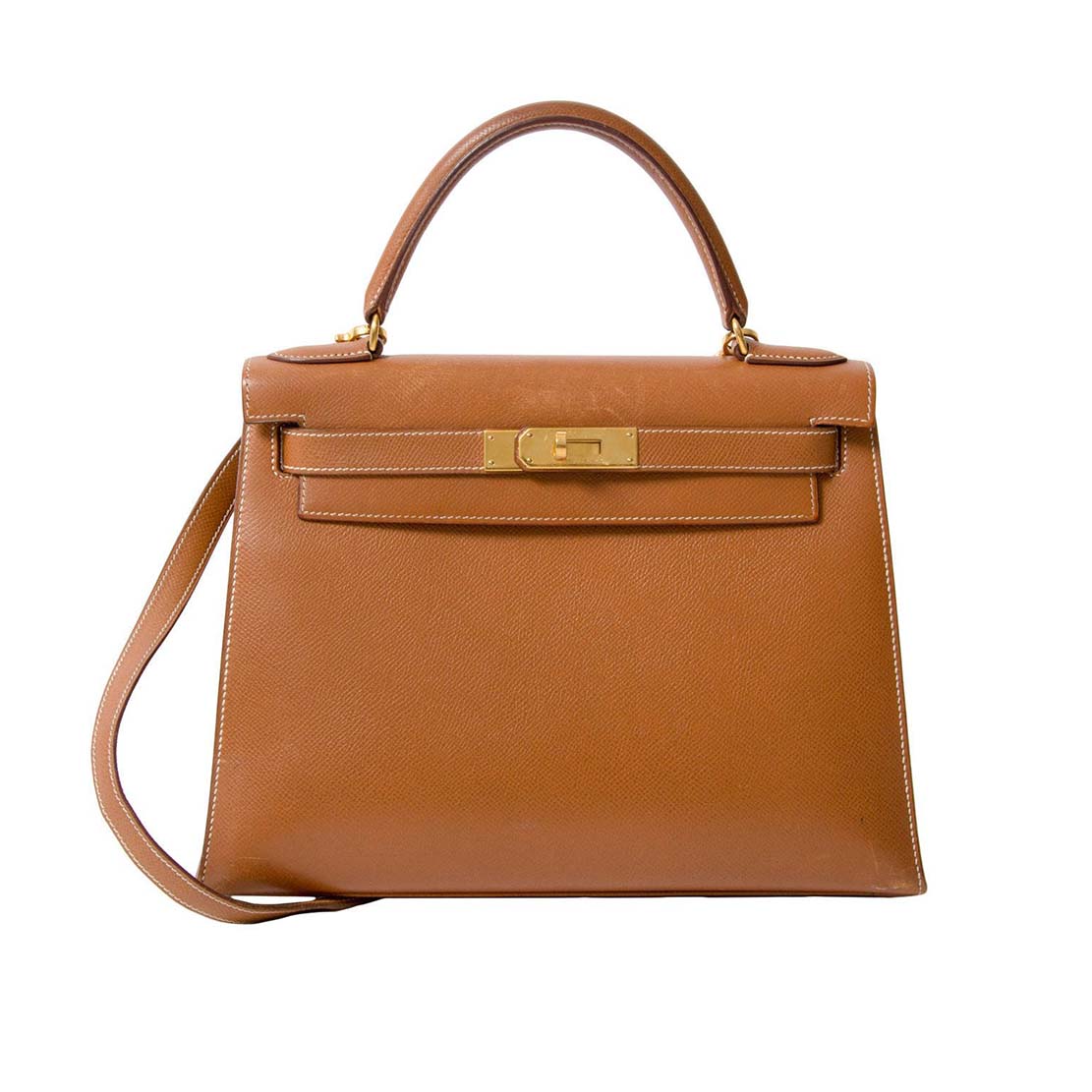
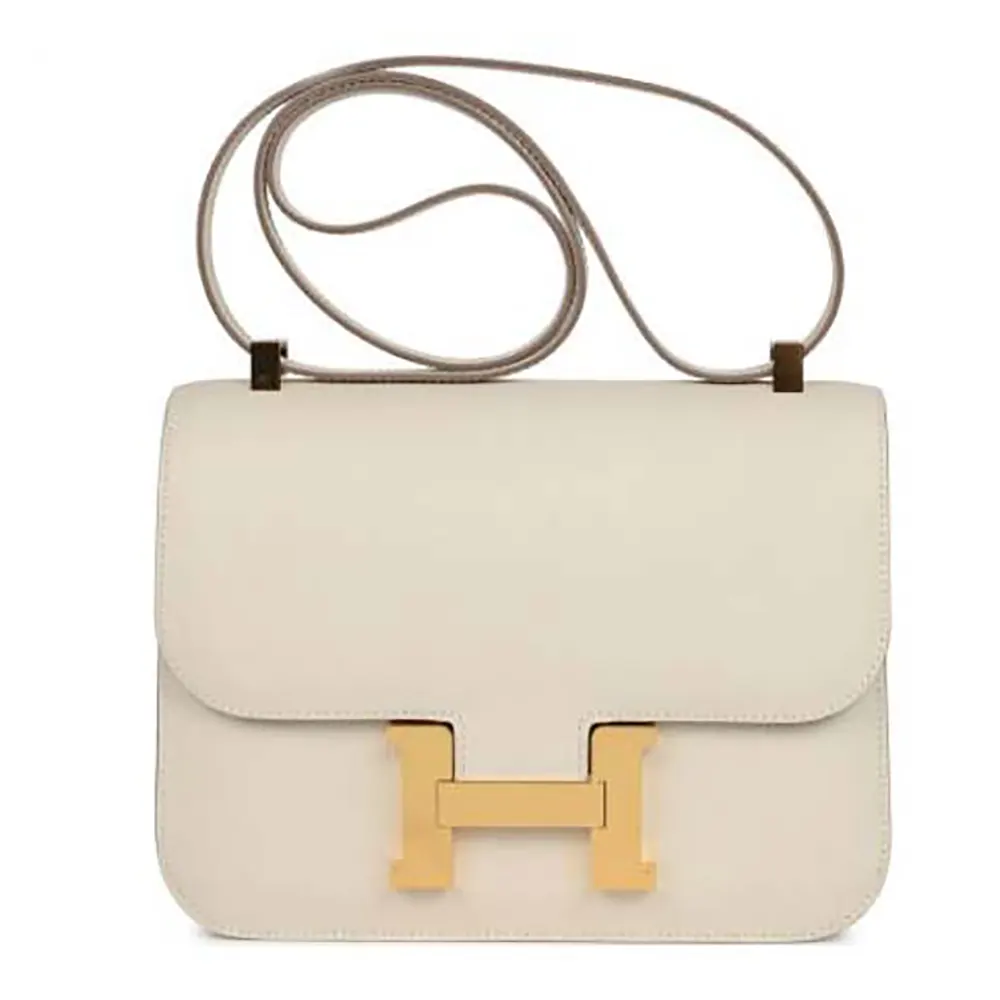
Epsom leather was introduced in 2003 to succeed Courchevel and its main feature is that it has an embossed grain instead of the natural hide texture. The pattern on the surface is done by pressing the leather, resulting in a flawless, consistent look and the material having a slight shine.
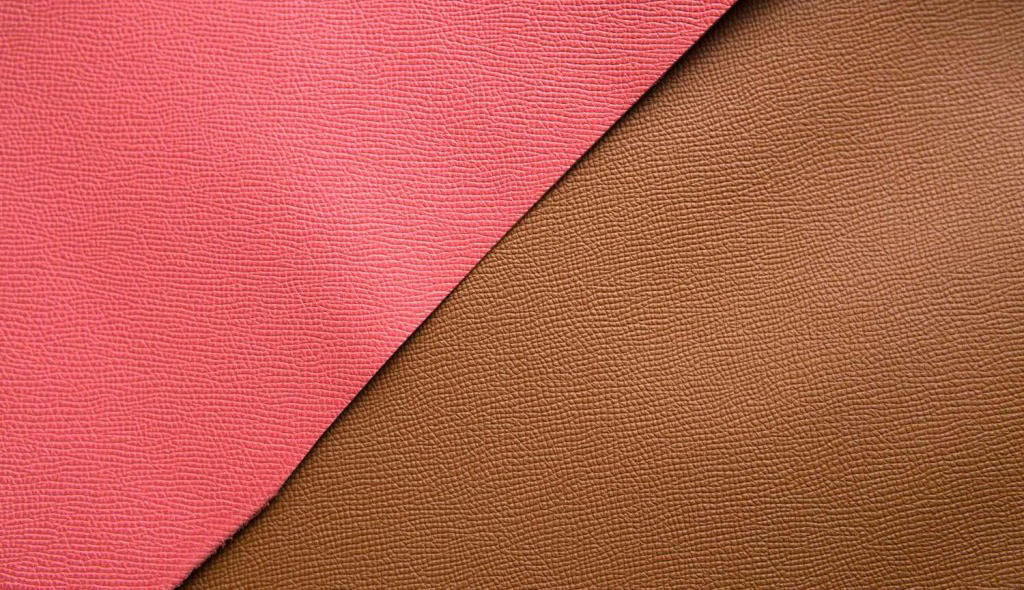
The weight of the Epsom leather is less than that of Togo and it is much harder, which is why bags and other leather goods made from this leather can still have a very clean and well-defined structured silhouette even after a long period of time. This surface finishing provides the leather with very high resistance to scratch and also that leather can be cleaned very easily even if there is frequent use.
2. Texture, Look, and Hand Feel
| Aspect | Togo Leather | Epsom Leather |
|---|---|---|
| Grain | Natural, pebbled, veiny | Embossed, uniform |
| Feel | Soft, flexible, traditional | Dry, firm, slightly glossy |
| Visual Style | Relaxed and organic | Clean and architectural |
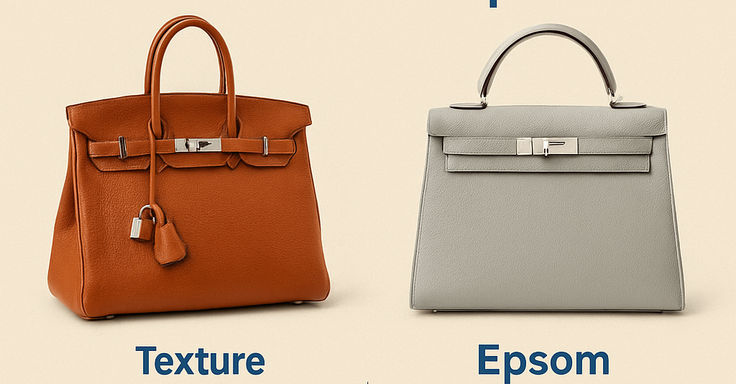
Togo is a lot more heavy on the natural leather side of the character, whereas Epsom is more of a clean, crisp, and structured type of look.
3. Capacity and Practical Use
Togo Leather
As a softer material, Togo leather adjusts nicely when stuffed, so that bags can carry more items in a comfortable manner. Hence, it can be a great material for bigger bags, everyday use, and travel, where fMoving and flexibility are key.
Epsom Leather
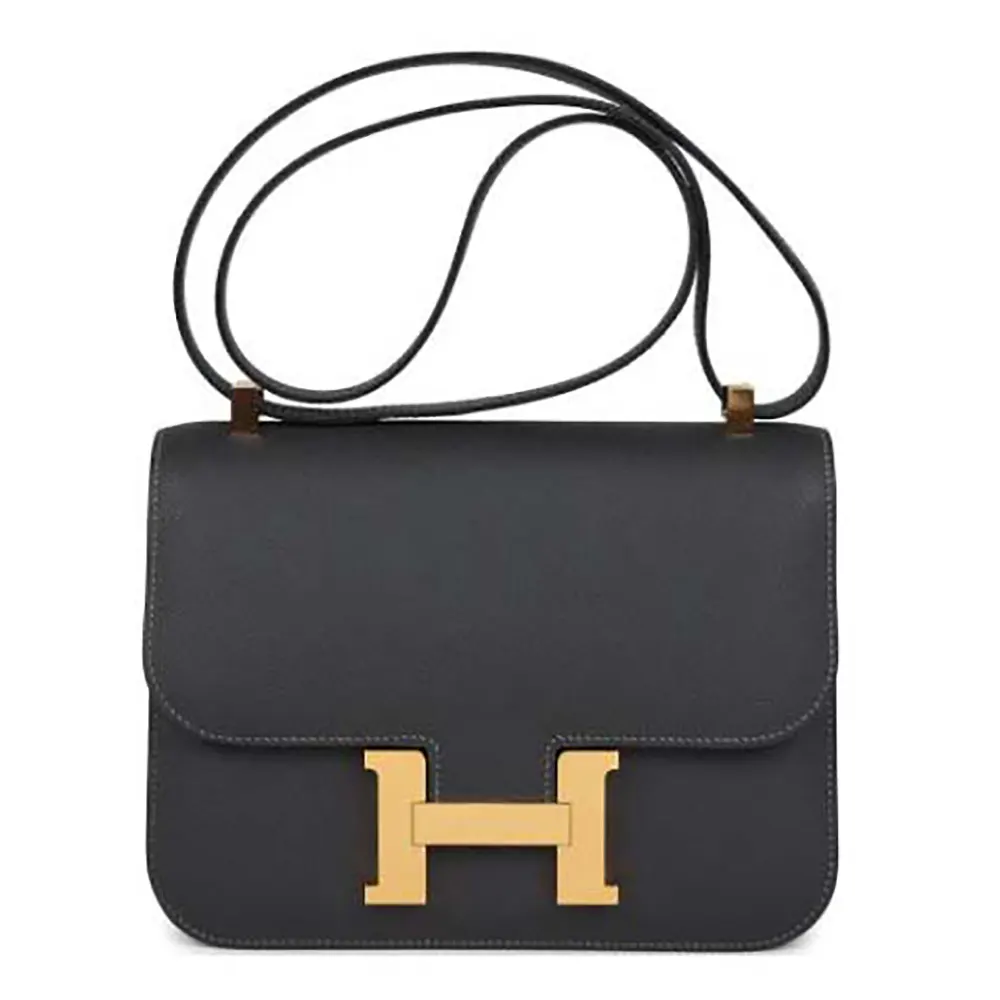
The stiffness of Epsom limits the expansion of the capacity thus, it is more controlled. Therefore, it is optimal for small bags, wallets, and card holders where the retention of the shape is required.
4. Color Performance
Epsom leather is a highly colorfast material, and as such, it is capable of bearing very bright and vivid colors which are also very saturated and have very clean edges. Togo leather, however, although it is just as beautiful, is a little softer in color and the natural grain of the leather may cause slight color variations depending on the light.
5. Durability and Maintenance
They are both very durable leathers and made with the intention of being used for a long time:
- Resistant to scratches
- Maintain shape well
- Easy to clean and care for
Meanwhile, Epsom leather provides a bit more resistance to scratches, but Togo leather can be made almost like new again much more simply when its surface gets worn.
6. Care and Storage Guidelines
- Cleaning: Regularly clean with a soft, dry cloth. If there are more persistent stains, take a slightly damp cloth with a mild soap and avoid the use of water more than necessary.
- Conditioning: To keep the leather attractive and still soft, leather conditioner made for these leather types should be applied.
- Storage: The pieces should be stored in a cool, dry place away from the sun. Dust bags or breathable fabric covers can be used.
- Maintenance: Periodically look over and if there are any repairs that should be done, take the help of a professional.
Conclusion: Which Leather Should You Choose?
Togo leather is perfect for people who are looking for leather that is more flexible, can hold more weight, and gives a more natural and less uniform look. It is ideal for use in everyday life and during travels, where comfort and practicality are of the essence.
Conversely, Epsom leather is a delight to those who opt for a neat, refined, and long-lasting style with great resistance, especially for handbags and small leather goods.
In the end, it is not a question of which one is better, but rather which one suits your lifestyle and design preference the most. The best leather, after all, is the one that fits your life seamlessly—no breaking-in period required.